Prices Are 38.6% Higher Than in 2020
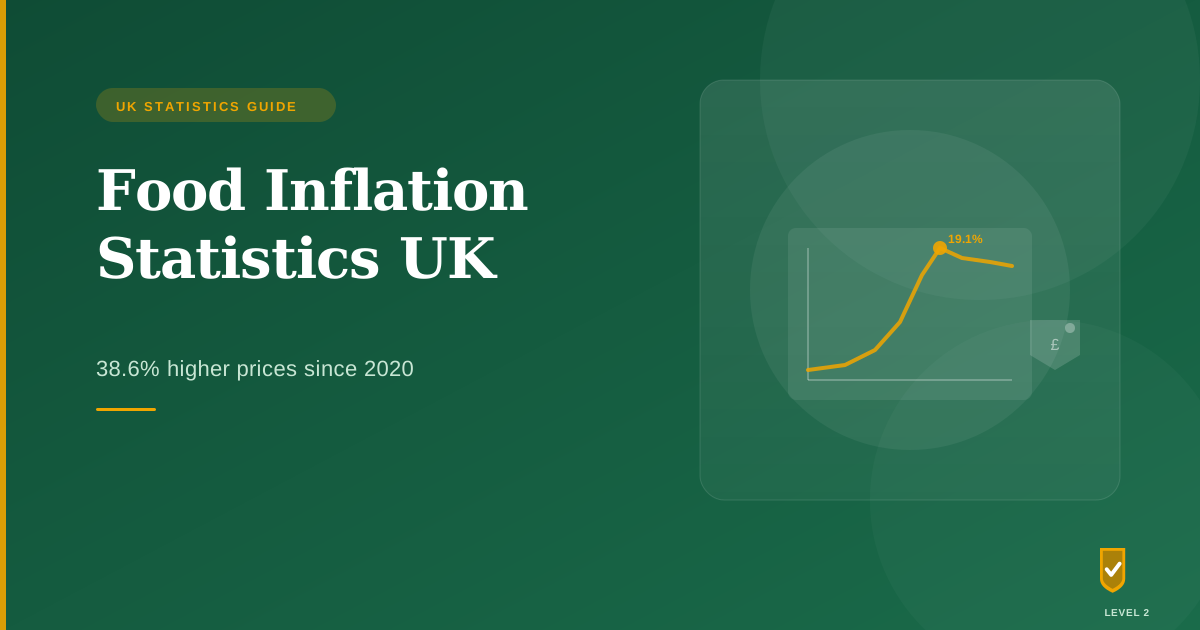
Since November 2020, UK food prices have surged by 38.6%—a staggering increase that has fundamentally altered household budgets and transformed the food industry landscape. While inflation peaked in March 2023 at 19.1%, current food price levels remain dramatically elevated compared to pre-pandemic baselines, with significant implications for consumer spending, food business operations, and social inequality. This ongoing inflation directly fuels food insecurity and increases reliance on food banks.
Key Facts & Figures
- Food inflation peaked at 19.1% in March 2023
- 38.6% total price increase from November 2020 to 2025
- February 2026 inflation rate: 3.3%
- July 2025 inflation rate: 4.9%
- UK experienced worst food inflation in Western Europe
- 91% of UK consumers cite food costs as a major concern
- Average weekly food basket increased by 27.4% to 30.1%
- 1.2 million food workers earning below the Real Living Wage
- British Retail Consortium forecasts 4.2% food inflation in coming year
- Aldi and Lidl growing by 20%+ as consumers seek value
- Restaurant spending at record levels, but driven by price increases rather than volume growth
- Poorest 50% of households see food costs consuming larger share of income
What Drove Food Inflation?
Multiple factors combined to create unprecedented food price increases:
- Energy Costs: Higher energy prices increased production, processing, and transportation costs throughout the food supply chain
- Fertiliser & Ukraine Crisis: Disruption to fertiliser supplies and grain production created global agricultural inflation
- Supply Chain Disruption & Brexit: Shipping delays, labour shortages, and trade barriers increased logistics costs
- Labour Costs & National Living Wage: Rising wage requirements increased production and processing costs
- Extended Producer Responsibility (EPR): New packaging waste responsibilities increased operational costs for food businesses
The Impact on Food Businesses
Food inflation has fundamentally altered how businesses operate:
- Margin Compression: Businesses operating on thin margins have seen profitability squeezed to unsustainable levels
- Menu Simplification: Restaurants reduce menu complexity to lower supply chain costs and labour intensity
- Business Closures: Thousands of restaurants and food retailers have closed due to unsustainable operating conditions
- Repricing Strategies: Businesses face difficult decisions about how much to raise menu prices without losing customers
- Shrinkflation: Companies reduce portion sizes or product quantities to maintain price points
- Consumer Impact: Households reduce food spending, purchase cheaper options, or use food banks
The Current Picture (2026)
As we enter 2026, the food inflation picture shows signs of stabilisation but continues to present challenges:
- Current food inflation (February 2026): 3.3%
- Bank of England forecasts inflation to remain at 3-3.5% in near term
- Commodity prices remain elevated, particularly coffee and cocoa
- 65% of UK fruit and vegetables are imported, making prices vulnerable to global factors
- Ongoing cost pressures mean food prices are unlikely to return to 2020 levels
Written by Food Safety Experts
This article was created by the team at Level 2 Food Hygiene, dedicated to promoting food safety and public health across the UK.
Sources & References
- https://commonslibrary.parliament.uk - House of Commons Library food inflation analysis
- https://www.ons.gov.uk - Office for National Statistics inflation data
- https://www.foodfoundation.org.uk - Food Foundation household food tracker
- https://tradingeconomics.com - Trading Economics inflation forecasts
Related guides
- Food Delivery Statistics UK: 2026 Facts, Data & Key Insights
- UK Restaurant Industry Statistics: 2026 Facts, Data & Key Insights
- Food Bank Statistics UK: 2026 Facts, Data & Key Insights
Looking for a food hygiene certificate? Get qualified fast with our online training.
View the Level 2 Food Hygiene Certificate →
Mark writes about food safety, food hygiene and accredited online training for Level 2 Food Hygiene Certificate, part of Online CPD Academy.